
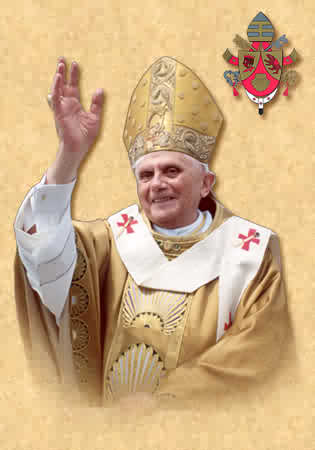
 Pubblichiamo di seguito il Messaggio che il Santo Padre Benedetto XVI ha inviato al Presidente della Pontificia Accademia delle Scienze Sociali, Prof. Mary Ann Glendon, e ai partecipanti alla XVIII Sessione Plenaria della Pontificia Accademia (27 aprile - 1° maggio 2012) sul tema: "The Global Quest for Tranquillitatis Ordinis. Pacem in terris, Fifty Years Later":
MESSAGGIO DEL SANTO PADRE
To Her Excellency Professor Mary Ann Glendon
President of the Pontifical Academy of Social Sciences
I am pleased to greet you and all who have gathered in Rome for the Eighteenth Plenary Session of the Pontifical Academy of Social Sciences. You have chosen to mark the fiftieth anniversary of Blessed John XXIII’s Encyclical Letter Pacem in Terris by studying the contribution of this important document to the Church’s social doctrine. At the height of the Cold War, when the world was still coming to terms with the threat posed by the existence and proliferation of weapons of mass destruction, Pope John addressed what has been described as an "open letter to the world". It was a heartfelt appeal from a great pastor, nearing the end of his life, for the cause of peace and justice to be vigorously promoted at every level of society, nationally and internationally. While the global political landscape has changed significantly in the intervening half-century, the vision offered by Pope John still has much to teach us as we struggle to face the new challenges for peace and justice in the post-Cold-War era, amid the continuing proliferation of armaments.
"The world will never be the dwelling-place of peace, till peace has found a home in the heart of each and every human person, till all preserve within themselves the order ordained by God to be preserved" (Pacem in Terris, 165). At the heart of the Church’s social doctrine is the anthropology which recognizes in the human creature the image of the Creator, endowed with intelligence and freedom, capable of knowing and loving. Peace and justice are fruits of the right order that is inscribed within creation itself, written on human hearts (cf. Rom 2:15) and therefore accessible to all people of good will, all "pilgrims of truth and of peace". Pope John’s Encyclical was and is a powerful summons to engage in that creative dialogue between the Church and the world, between believers and non-believers, which the Second Vatican Council set out to promote. It offers a thoroughly Christian vision of man’s place in the cosmos, confident that in so doing it is holding out a message of hope to a world that is hungry for it, a message that can resonate with people of all beliefs and none, because its truth is accessible to all.
In that same spirit, after the terrorist attacks that shook the world in September 2001, Blessed John Paul II insisted that there can be "no peace without justice, no justice without forgiveness" (Message for the 2002 World Day of Peace). The notion of forgiveness needs to find its way into international discourse on conflict resolution, so as to transform the sterile language of mutual recrimination which leads nowhere. If the human creature is made in the image of God, a God of justice who is "rich in mercy" (Eph 2:4), then these qualities need to be reflected in the conduct of human affairs. It is the combination of justice and forgiveness, of justice and grace, which lies at the heart of the divine response to human wrong-doing (cf. Spe Salvi, 44), at the heart, in other words, of the "divinely established order" (Pacem in Terris, 1). Forgiveness is not a denial of wrong-doing, but a participation in the healing and transforming love of God which reconciles and restores.
How eloquent, then, was the choice of theme for the 2009 Special Assembly for Africa of the Synod of Bishops: "The Church in Africa at the Service of Reconciliation, Justice and Peace". The life-giving message of the Gospel has brought hope to millions of Africans, helping them to rise above the sufferings inflicted on them by repressive regimes and fratricidal conflicts. Similarly, the 2010 Assembly on the Church in the Middle East highlighted the themes of communion and witness, the oneness of mind and soul that characterizes those who set out to follow the light of truth. Historic wrongs and injustices can only be overcome if men and women are inspired by a message of healing and hope, a message that offers a way forward, out of the impasse that so often locks people and nations into a vicious circle of violence. Since 1963, some of the conflicts that seemed insoluble at the time have passed into history. Let us take heart, then, as we struggle for peace and justice in the world today, confident that our common pursuit of the divinely established order, of a world where the dignity of every human person is accorded the respect that is due, can and will bear fruit.
I commend your deliberations to the maternal guidance of Our Lady, Queen of Peace. To you, to Bishop Sánchez Sorondo, and to all the participants in the XVIII Plenary Session, I gladly impart my Apostolic Blessing.
From the Vatican, 27 April 2012
BENEDICTUS PP. XVI
-----------
A Sua Eccellenza la Professoressa Mary Ann Glendon
Presidente della Pontificia Accademia delle Scienze Sociali
Sono lieto di salutare lei e tutti coloro che si sono riuniti a Roma per la XVIII Sessione Plenaria della Pontificia Accademia delle Scienze Sociali. Avete scelto di celebrare il cinquantesimo anniversario della Lettera enciclica Pacem in terris del beato Giovanni XXIII esaminando il contributo dato da questo importante documento alla dottrina sociale della Chiesa.
Al culmine della guerra fredda, quando il mondo stava ancora venendo a patti con la minaccia costituita dall'esistenza e dalla proliferazione di armi di distruzione di massa, Papa Giovanni scrisse quella che è stata definita «una lettera aperta al mondo».
Era un appello sentito di un grande Pastore, vicino al termine della propria vita, affinché la causa della pace e della giustizia venisse promossa con vigore in ogni settore della società, a livello nazionale e internazionale. Mentre lo scenario politico globale è notevolmente cambiato nel mezzo secolo trascorso da allora, la visione proposta da Papa Giovanni ha ancora molto da insegnarci mentre lottiamo per affrontare le nuove sfide per la pace e per la giustizia nell'era post guerra fredda, tra la continua proliferazione degli armamenti.
«Infatti non si dà pace fra gli uomini se non vi è pace in ciascuno di essi, se cioè ognuno non instaura in se stesso l'ordine voluto da Dio» (Pacem in terris n. 88). Al centro della dottrina sociale della Chiesa c'è l'antropologia che riconosce nella creatura umana l'immagine del Creatore, dotata d'intelligenza e di libertà, capace di conoscere e di amare. Pace e giustizia sono frutto del giusto ordine, che è iscritto nella creazione stessa, scritto nel cuore umano (cfr. Rm 2, 15) e pertanto accessibile a tutte le persone di buona volontà, a tutti i «pellegrini di verità e di pace». L'enciclica di Papa Giovanni era ed è un forte invito a impegnarsi in quel dialogo creativo tra la Chiesa e il mondo, tra i credenti e i non credenti, che il concilio Vaticano II si è proposto di promuovere. Offre una visione profondamente cristiana del posto che occupa l'uomo nell'universo, fiduciosa che così facendo propone un messaggio di speranza a un mondo che ha fame di essa, un messaggio che può risuonare tra le persone di ogni credo e di nessun credo, poiché la sua verità è accessibile a tutti.
In questo stesso spirito, dopo che gli attacchi terroristici hanno scosso il mondo nel settembre 2001, il beato Giovanni Paolo II ha ribadito che «non c'è pace senza giustizia, non c'è giustizia senza perdono» (Messaggio per la Giornata Mondiale della Pace 2002).
Il concetto di perdono deve inserirsi nel dibattito internazionale sulla risoluzione dei conflitti, al fine di trasformare il linguaggio sterile della reciproca recriminazione, che non conduce da nessuna parte.
Se la creatura umana è fatta a immagine di Dio, un Dio di giustizia che è «ricco di misericordia» (Ef 2, 4), allora queste qualità devono riflettersi nella conduzione degli affari umani. È la combinazione di giustizia e perdono, di giustizia e grazia, a essere al centro della risposta divina al peccato umano (cfr. Spe salvi n. 44), al centro, in altre parole, dell'«ordine stabilito da Dio» (Pacem in terris n. 1). Il perdono non è negazione del male, ma partecipazione all'amore salvifico e trasformatore di Dio, che riconcilia e guarisce.
Quanto è stata eloquente, dunque, la scelta del tema dell'Assemblea Speciale per l'Africa del Sinodo dei Vescovi del 2009: «La Chiesa in Africa a servizio della riconciliazione, della giustizia e della pace». Il messaggio portatore di vita del Vangelo ha recato speranza a milioni di africani, aiutandoli a superare le sofferenze inflitte loro da regimi repressivi e conflitti fratricidi. In modo analogo, l'Assemblea del 2010 sulla Chiesa in Medio Oriente ha sottolineato i temi della comunione e della testimonianza, l'unità del pensiero e dell'anima che caratterizza coloro che s'impegnano a seguire la luce della verità. I torti storici e le ingiustizie possono essere superati solo se gli uomini e le donne sono ispirati da un messaggio di guarigione e di speranza, un messaggio che offre una via per andare avanti, per uscire dall'impasse che spesso imprigiona le persone e le nazioni in un circolo vizioso di violenza. Dal 1963 alcuni conflitti che all'epoca sembravano irrisolvibili sono diventati storia. Facciamoci coraggio, dunque, mentre lottiamo per la pace e la giustizia nel mondo attuale, fiduciosi che la nostra ricerca comune dell'ordine stabilito da Dio, di un mondo in cui la dignità di ogni persona umana riceva il rispetto che le è dovuto, può dare frutto e lo darà.
Affido le vostre deliberazioni alla guida materna di Nostra Signora, Regina della Pace. A lei, Monsignor Sánchez Sorondo, e a tutti i partecipanti alla XVIII Sessione Plenaria, imparto volentieri la mia Benedizione Apostolica.
Dal Vaticano, 27 aprile 2012
BENEDICTUS PP. XVI
© Bollettino Santa Sede - 30 aprile 2012