
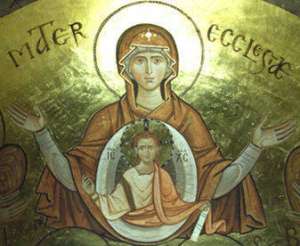
 Alle ore 10 di questa mattina, nella Basilica Vaticana, il Santo Padre Francesco ha presieduto la celebrazione della Messa della Solennità di Maria Santissima Madre di Dio nell’ottava di Natale e nella ricorrenza della 55ma Giornata Mondiale della Pace sul tema: Dialogo fra generazioni, educazione e lavoro: strumenti per edificare una pace duratura.
Pubblichiamo di seguito l’omelia che Papa Francesco ha pronunciato nel corso della Celebrazione Eucaristica, dopo la proclamazione del Vangelo:
I pastori trovano «Maria e Giuseppe e il bambino, adagiato nella mangiatoia» (Lc 2,16). La mangiatoia è segno gioioso per i pastori: è la conferma di quanto avevano appreso dall’angelo (cfr v. 12), è il luogo dove trovano il Salvatore. Ed è anche la prova che Dio è accanto a loro: nasce in una mangiatoia, oggetto a loro ben noto, dimostrando così di essere vicino e familiare. Ma la mangiatoia è segno gioioso anche per noi: Gesù ci tocca il cuore nascendo piccolo e povero, ci infonde amore anziché timore. La mangiatoia ci anticipa che si farà cibo per noi. E la sua povertà è una bella notizia per tutti, specialmente per chi è ai margini, per i rifiutati, per chi al mondo non conta. Dio viene lì: nessuna corsia preferenziale, nemmeno una culla! Ecco la bellezza di vederlo adagiato in una mangiatoia.
Ma per Maria, la Santa Madre di Dio, non è stato così. Lei ha dovuto sostenere “lo scandalo della mangiatoia”. Anche lei, ben prima dei pastori, aveva ricevuto l’annuncio di un angelo, che le aveva detto parole solenni, parlandole del trono di Davide: «Concepirai un figlio, lo darai alla luce e lo chiamerai Gesù. Sarà grande e verrà chiamato Figlio dell’Altissimo; il Signore Dio gli darà il trono di Davide suo padre» (Lc 1,31-32). E ora lo deve deporre in una mangiatoia per animali. Come tenere insieme il trono del re e la povera mangiatoia? Come conciliare la gloria dell’Altissimo e la miseria di una stalla? Pensiamo al disagio della Madre di Dio. Che cosa c’è di più duro per una madre che vedere il proprio figlio soffrire la miseria? C’è da sentirsi sconfortati. Non si potrebbe rimproverare Maria se si fosse lamentata di tutta quella inattesa desolazione. Ma lei non si perde d’animo. Non si sfoga, ma sta in silenzio. Sceglie una parte diversa rispetto alla lamentela: «Maria, da parte sua, – dice il Vangelo – custodiva tutte queste cose, meditandole nel suo cuore» (Lc 2,19).
È un modo di fare diverso da quello dei pastori e della gente. Loro raccontano a tutti ciò che hanno visto: l’angelo apparso nel cuore della notte, le sue parole intorno al Bambino. E la gente, all’udire queste cose, è presa da stupore (cfr v. 18): parole e meraviglia. Maria, invece, appare pensosa. Custodisce e medita nel cuore. Sono due atteggiamenti diversi che possiamo riscontrare anche in noi. Il racconto e lo stupore dei pastori ricorda la condizione degli inizi nella fede. Lì è tutto facile e lineare, si è rallegrati dalla novità di Dio che entra nella vita, portando in ogni aspetto un clima di meraviglia. Mentre l’atteggiamento meditante di Maria è l’espressione di una fede matura, adulta, non degli inizi. Di una fede che non è appena nata, di una fede che è diventata generativa. Perché la fecondità spirituale passa attraverso la prova. Dalla quiete di Nazaret e dalle trionfanti promesse ricevute dall’angelo – il suo inizio – Maria si trova ora nella buia stalla di Betlemme. Ma è lì che dona Dio al mondo. E mentre altri, di fronte allo scandalo della mangiatoia, sarebbero stati presi dallo sconforto, lei no: custodisce meditando.
Impariamo dalla Madre di Dio questo atteggiamento: custodire meditando. Perché anche a noi capita di dover sostenere certi “scandali della mangiatoia”. Ci auguriamo che tutto vada bene e poi arriva, come un fulmine a ciel sereno, un problema inaspettato. E si crea un urto doloroso tra le attese e la realtà. Capita anche nella fede, quando la gioia del Vangelo viene messa alla prova da una situazione dura in cui ci si trova a camminare. Ma oggi la Madre di Dio ci insegna a trarre beneficio da questo urto. Ci mostra che è necessario, che è la via stretta per arrivare alla meta, la croce senza la quale non si risorge. È come un parto doloroso, che dà vita a una fede più matura.
Mi domando, fratelli e sorelle, come compiere questo passaggio, come superare l’urto tra l’ideale e il reale? Facendo, appunto, come Maria: custodendo e meditando. Anzitutto Maria custodisce, cioè non disperde. Non respinge ciò che accade. Conserva nel cuore ogni cosa, tutto ciò che ha visto e sentito. Le cose belle, come quello che le aveva detto l’angelo e ciò che le avevano raccontato i pastori. Ma anche le cose difficili da accettare: il pericolo corso per essere rimasta incinta prima del matrimonio, ora l’angustia desolante della stalla dove ha partorito. Ecco che cosa fa Maria: non seleziona, ma custodisce. Accoglie la realtà come viene, non tenta di camuffare, di truccare la vita, custodisce nel cuore.
E poi c’è il secondo atteggiamento. Come custodisce Maria? Custodisce meditando. Il verbo impiegato dal Vangelo evoca l’intreccio tra le cose: Maria mette a confronto esperienze diverse, trovando i fili nascosti che le legano. Nel suo cuore, nella sua preghiera compie questa operazione straordinaria: lega le cose belle e quelle brutte; non le tiene separate, ma le unisce. E per questo Maria è la Madre della cattolicità. Possiamo, forzando il linguaggio, dire che per questo Maria è cattolica, perché unisce, non separa. E così afferra il senso pieno, la prospettiva di Dio. Nel suo cuore di madre comprende che la gloria dell’Altissimo passa dall’umiltà; accoglie il disegno della salvezza, per il quale Dio si doveva posare su una mangiatoia. Vede il Bambino divino fragile e tremante, e accoglie il meraviglioso intreccio divino tra grandezza e piccolezza. Così custodisce Maria, meditando.
Questo sguardo inclusivo, che supera le tensioni custodendo e meditando nel cuore, è lo sguardo delle madri, che nelle tensioni non separano, le custodiscono e così cresce la vita. È lo sguardo con il quale tante madri abbracciano le situazioni dei figli. È uno sguardo concreto, che non si fa prendere dallo sconforto, che non si paralizza davanti ai problemi, ma li colloca in un orizzonte più ampio. E Maria va così, fino al calvario, meditando e custodendo, custodisce e medita. Vengono in mente i volti delle madri che assistono un figlio malato o in difficoltà. Quanto amore c’è nei loro occhi, che mentre piangono sanno infondere motivi per sperare! Il loro è uno sguardo consapevole, senza illusioni, eppure al di là del dolore e dei problemi offre una prospettiva più ampia, quella della cura, dell’amore che rigenera speranza. Questo fanno le madri: sanno superare ostacoli e conflitti, sanno infondere pace. Così riescono a trasformare le avversità in opportunità di rinascita e in opportunità di crescita. Lo fanno perché sanno custodire. Le madri sanno custodire, sanno tenere insieme i fili della vita, tutti. C’è bisogno di gente in grado di tessere fili di comunione, che contrastino i troppi fili spinati delle divisioni. E questo le madri sanno farlo.
Il nuovo anno inizia nel segno della Santa Madre di Dio, nel segno della Madre. Lo sguardo materno è la via per rinascere e crescere. Le madri, le donne guardano il mondo non per sfruttarlo, ma perché abbia vita: guardando con il cuore, riescono a tenere insieme i sogni e la concretezza, evitando le derive del pragmatismo asettico e dell’astrattezza. E la Chiesa è madre, è madre così, la Chiesa è donna, è donna così. Per questo non possiamo trovare il posto della donna nella Chiesa senza rispecchiarla in questo cuore di donna-madre. Questo è il posto della donna nella Chiesa, il gran posto, dal quale derivano altri più concreti, più secondari. Ma la Chiesa è madre, la Chiesa è donna. E mentre le madri donano la vita e le donne custodiscono il mondo, diamoci da fare tutti per promuovere le madri e proteggere le donne. Quanta violenza c’è nei confronti delle donne! Basta! Ferire una donna è oltraggiare Dio, che da una donna ha preso l’umanità, non da un angelo, non direttamente: da una donna. Come da una donna, la Chiesa donna, prende l’umanità dei figli.
All’inizio del nuovo anno mettiamoci sotto la protezione di questa donna, la Santa Madre di Dio che è nostra madre. Ci aiuti a custodire e meditare ogni cosa, senza temere le prove, nella gioiosa certezza che il Signore è fedele e sa trasformare le croci in risurrezioni. Anche oggi invochiamola come fece il Popolo di Dio a Efeso. Ci mettiamo tutti in piedi, guardiamo la Madonna, e come fece il popolo di Dio a Efeso, ripetiamo tre volte il suo titolo di Madre di Dio. Tutti insieme: “Santa Madre di Dio, Santa Madre di Dio, Santa Madre di Dio!”. Amen.
Les pasteurs trouvent « Marie et Joseph, avec le nouveau-né couché dans la mangeoire » (Lc 2, 16). La mangeoire est un signe joyeux pour les pasteurs : elle est la confirmation de ce qu’ils avaient appris de l’ange (cf. v.), elle est le lieu où ils trouvent le Sauveur. Et c’est aussi la preuve que Dieu est à leurs côtés : il naît dans une mangeoire, un objet qu’il connaissent bien. Il montre ainsi qu’il est proche et familier. Mais la mangeoire est un signe joyeux pour nous aussi : Jésus touche notre cœur en naissant petit et pauvre, il nous insuffle l’amour plutôt que la crainte. La mangeoire nous annonce à l’avance qu’il se fera nourriture pour nous. Et sa pauvreté est une bonne nouvelle pour tous, spécialement pour ceux qui sont à la marge, pour les rejetés, pour ceux qui ne comptent pas aux yeux du monde. Dieu vient là : aucune voie privilégiée, pas même un berceau ! Voilà la beauté de le voir couché dans une mangeoire.
Mais pour Marie, la Sainte Mère de Dieu, il n’en a pas été ainsi. Elle a dû supporter “le scandale de la mangeoire”. Elle aussi, bien avant les bergers, avait reçu l’annonce d’un ange qui lui avait dit des paroles solennelles évoquant le trône de David : « Tu vas concevoir et enfanter un fils; tu lui donneras le nom de Jésus.Il sera grand, il sera appelé Fils du Très-Haut; le Seigneur Dieu lui donnera le trône de David son père » (Lc 1, 31-32). Et maintenant elle doit le coucher dans une mangeoire pour animaux. Comment tenir ensemble le trône du roi et la pauvre mangeoire? Comment concilier la gloire du Très-Haut et la misère d’une étable? Pensons au trouble de la Mère de Dieu. Qu’y a-t-il de plus dur pour une mère que de voir son enfant souffrir de pauvreté? Il y a de quoi se sentir découragé. On ne pourrait pas reprocher à Marie de se plaindre de toute cette désolation inattendue. Mais elle ne se décourage pas. Elle ne s’épanche pas mais garde le silence. Elle choisit une attitude autre que la plainte : « Marie, cependant, – nous dit l’Évangile – retenait tous ces événements et les méditait dans son cœur » (Lc 2, 19).
C’est une façon de faire différente de celle des bergers et des gens. Ils racontent à tout le monde ce qu’ils ont vu: l’ange qui est apparu au milieu de la nuit, ses paroles concernant l’Enfant. Et les gens, en entendant ces choses, sont saisis d’étonnement (cf. v. 18): paroles et étonnement. Marie, par contre, semble pensive. Elle conserve et médite dans son cœur. Ce sont deux attitudes différentes que nous pouvons aussi retrouver en nous. Le récit et l’étonnement des bergers rappellent la condition des débuts dans la foi. Là, tout est facile et linéaire, on s’est réjoui de la nouveauté de Dieu qui entre dans la vie en portant dans toutes ses dimensions un air d’étonnement. Au contraire, l’attitude méditative de Marie est l’expression d’une foi mûre, adulte, pas celles des débuts. Une foi qui ne vient pas de naître, une foi qui est devenue génératrice. Parce que la fécondité spirituelle passe par l’épreuve. De la quiétude de Nazareth et des promesses triomphantes reçues de l’ange - au commencement - Marie se trouve maintenant dans l’étable obscure de Bethléem. Mais c’est là qu’elle donne Dieu au monde. Et tandis que d’autres, face au scandale de la mangeoire, auraient été pris de découragement, elle non: elle conserve en méditant.
Apprenons de la Mère de Dieu cette attitude: conserver en méditant. Parce qu’il nous arrive aussi de devoir vivre certains “scandales de la mangeoire”. Nous attendons que tout se passe bien et puis, comme un éclair dans le ciel, survient à l’improviste un problème. Et il se crée un choc douloureux entre les attentes et la réalité. Cela arrive aussi dans la foi, quand la joie de l’Évangile est mise à l’épreuve par une situation difficile que l’on traverse. Mais aujourd’hui, la Mère de Dieu nous enseigne à tirer profit de ce choc. Elle nous montre qu’il est nécessaire, qu’il est le chemin étroit pour arriver au but, la croix sans laquelle on ne ressuscite pas. C’est comme un enfantement douloureux qui donne vie à une foi plus mûre.
Je me demande, frères et sœurs, comment accomplir ce passage, comment surmonter le choc entre l’idéal et le réel? En faisant, précisément, comme Marie: en conservant et en méditant. Avant tout, Marie conserve, c’est-à-dire qu’elle ne disperse pas. Elle ne rejette pas ce qui arrive. Elle conserve chaque chose dans son cœur, tout ce qu’elle a vu et entendu. Les belles choses, comme ce que l’ange lui avait dit et ce que les bergers lui avaient raconté. Mais aussi les choses difficiles à accepter: le danger encouru d’être tombée enceinte avant le mariage, maintenant l’angoisse désolante de l’étable où elle a enfanté. Voilà ce que fait Marie: elle ne sélectionne pas, mais elle conserve. Elle accueille la réalité comme elle vient, elle ne cherche pas à camoufler, à falsifier la vie, elle conserve dans son cœur.
Et puis il y a la deuxième attitude: Comment Marie conserve-t-elle? Elle conserve en méditant. Le verbe employé par l’Évangile évoque l’entrelacement entre les choses: Marie confronte des expériences différentes, en trouvant les fils cachés qui les lient. Dans son cœur, dans sa prière, elle accomplit cette opération extraordinaire: elle lie les choses belles et les mauvaises ; elle ne les sépare pas, mais elle les unit. Et c’est pourquoi Marie est la Mère de la catholicité. Nous pouvons, en forçant le langage, dire que c’est pourquoi Marie est catholique, parce qu’elle unit, elle ne sépare pas. Et ainsi elle en saisit le plein sens, la perspective de Dieu. Dans son cœur de mère, elle comprend que la gloire du Très-Haut passe par l’humilité ; elle accueille le dessein du salut, selon lequel Dieu devait être déposé dans une mangeoire. Elle voit l’Enfant divin fragile et tremblant, et accueille le merveilleux entrelacement divin de la grandeur et de la petitesse. C’est ainsi que Marie conserve, en méditant.
Ce regard inclusif, qui dépasse les tensions en conservant et en méditant dans le cœur, est le regard des mères qui ne séparent pas dans les tensions, elles les conservent et ainsi grandit la vie. C’est le regard avec lequel tant de mères embrassent les situations de leurs enfants.C’est un regard concret, qui ne se laisse pas prendre par le découragement, qui n’est pas paralysé devant les problèmes, mais qui les place dans un horizon plus large.Et Marie avance ainsi, jusqu’au calvaire, en méditant et en conservant, elle conserve et médite. Les visages des mères qui assistent un enfant malade ou en difficulté viennent à l’esprit.Comme il y a d’amour dans leurs yeux qui, en pleurant, savent insuffler des raisons d’espérer!Leur regard est conscient, sans illusions, mais au-delà de la douleur et des problèmes, il offre une perspective plus large, celle du soin, de l’amour qui régénère l’espérance.C’est ce que font les mères: elles savent surmonter les obstacles et les conflits, elles savent insuffler la paix.Elles réussissent ainsi à transformer les adversités en opportunités de renaissance, en opportunités de croissance.Elles le font parce qu’elles savent conserver. Les mères savent conserver, elles savent maintenir ensemble les fils de la vie, tous.Nous avons besoin de personnes capables de tisser des fils de communion, pour contrer les trop nombreux fils barbelés des divisions. Et cela, les mères savent le faire.
La nouvelle année commence sous le signe de la Sainte Mère de Dieu, sous le signe de la mère.Le regard maternel est le chemin pour renaître et grandir.Les mères, les femmes regardent le monde non pour l’exploiter, mais pour qu’il ait la vie: en regardant avec le cœur, elles réussissent à tenir ensemble les rêves et le concret, en évitant les dérives du pragmatisme aseptisé et de l’abstraction.Et l’Eglise est mère, elle est mère de cette façon, l’Eglise est femme, elle est femme de cette façon. C’est pourquoi nous ne pouvons pas trouver la place de la femme dans l’Eglise sans la considérer dans son cœur de femme-mère. Voilà la place de la femme dans l’Eglise, la grande place de laquelle dérivent les autres plus concrètes, secondaires. Mais l’Eglise est mère, l’Eglise est femme. Et pendant que les mères donnent la vie et que les femmes gardent le monde, faisons tous en sorte de promouvoir les mères et de protéger les femmes.Que de violence il y a à l’égard des femmes !Assez!Blesser une femme, c’est outrager Dieu qui a pris l’humanité d’une femme, pas d’un ange, pas directement, d’une femme. Comme d’une femme, l’Eglise femme prend l’humanité des enfants.
Au début de la nouvelle année, mettons-nous sous la protection de cette femme, la Sainte Mère de Dieu qui est notre mère.Qu’elle nous aide à conserver et à méditer toute chose, sans craindre les épreuves, dans la joyeuse certitude que le Seigneur est fidèle et qu’il sait transformer les croix en résurrections.Aujourd’hui encore, invoquons-la comme l’avait fait le Peuple de Dieu à Éphèse. Nous nous mettons tous debout, nous regardons la Vierge, et, comme l’a fait le peuple de Dieu à Ephèse, nous répétons trois fois son titre de Mère de Dieu. Tous ensemble: “Sainte Mère de Dieu, Sainte Mère de Dieu, Sainte Mère de Dieu !”. Amen.
The shepherds found “Mary and Joseph, and the child lying in the manger” (Lk 2:16). For the shepherds, the manger was a joyful sign: it was the confirmation of the message they had heard from the angel (cf. v. 12), the place where they found the Saviour. It is also the proof of God’s closeness to them, for he was born in a manger, an object they know well, as a sign of his closeness and familiarity. The manger is also a joyful sign for us. Jesus touches our hearts by being born in littleness and poverty; he fills us with love, not fear. The manger foretells the One who makes himself food for us. His poverty is good news for everyone, especially the marginalized, the rejected and those who do not count in the eyes of the world. For that is how God comes: not on a fast track, and lacking even a cradle! That is what is beautiful about seeing him there, laid in a manger.
Yet such was not the case with Mary, the Holy Mother of God. She had to endure “the scandal of the manger”. She too, long before the shepherds, had received the message of an angel, who spoke to her solemnly about the throne of David: “You will conceive in your womb and bear a son, and you will name him Jesus. He will be great, and will be called the Son of the Most High, and the Lord God will give to him the throne of his ancestor David” (Lk 1:31-32). And now, Mary has to lay him in a trough for animals. How can she hold together the throne of a king and the lowly manger? How can she reconcile the glory of the Most High and the bitter poverty of a stable? Let us think of the distress of the Mother of God. What can be more painful for a mother than to see her child suffering poverty? It is troubling indeed. We would not blame Mary, were she to complain of those unexpected troubles. Yet she does not lose heart. She does not complain, but keeps silent. Rather than complain, she chooses a different part: For her part, the Gospel tells us, Mary “kept all these things, pondering them in her heart” (cf. Lk 2:19).
That is not what the shepherds and the people do. The shepherds tell everyone about what they had seen: the angel that appeared in the heart of the night, and his words concerning the Child. And the people, upon hearing these things, are amazed (cf. v. 18). Words and amazement. Mary, instead, is pensive; she keeps all these things, pondering them in her heart. We ourselves can have the same two different responses. The story told by the shepherds, and their own amazement, remind us of the beginnings of faith, when everything seems easy and straightforward. We rejoice in the newness of God who enters into our lives and fills us with wonder. Mary’s pensiveness, on the other hand, is the expression of a mature, adult faith, not a faith of beginners. Not a newborn faith, it is rather a faith that now gives birth. For spiritual fruitfulness is born of trials and testing. From the quiet of Nazareth and from the triumphant promises received by the Angel – the beginnings – Mary now finds herself in the dark stable of Bethlehem. Yet that is where she gives God to the world. Others, before the scandal of the manger, might feel deeply troubled. She does not: she keeps those things, pondering them in her heart.
Let us learn from the Mother of God how to have that same attitude: to keep and to ponder. Because we may well have to endure certain “scandals of the manger”. We hope that everything will be all right and then, like a bolt from the blue, an unexpected problem arises. Our expectations clash painfully with reality. That can also happen in the life of faith, when the joy of the Gospel is put to the test in troubling situations. Today the Mother of God teaches us to draw profit from this clash. She shows us that it is necessary: it is the narrow path to achieve the goal, the cross, without which there can be no resurrection. Like the pangs of childbirth, it begets a more mature faith.
I ask, brothers and sisters, how do we make this passage, how do we surmount this clash between the ideal and the real? By doing exactly what Mary did: by keeping and by pondering. First, Mary “keeps”, that is she holds on to what happens; she does not forget or reject it. She keeps in her heart everything that she saw and heard. The beautiful things, like those spoken to her by the angel and the shepherds, but also the troubling things: the danger of being found pregnant before marriage and, now, the lowly stable where she has had to give birth. That is what Mary does. She does not pick and choose; she keeps. She accepts life as it comes, without trying to camouflage or embellish it; she keeps those things in her heart.
Then, Mary’s second attitude is about how she keeps: she keeps and she ponders. The Gospel speaks of Mary “bringing together”, comparing, her different experiences and finding the hidden threads that connect them. In her heart, in her prayer, she does exactly that: she binds together the beautiful things and the unpleasant things. She does not keep them apart, but brings them together. It is for this reason that Mary is said to be the Mother of Catholicity. In this regard, we can dare to say that it is because of this that Mary is said to be Catholic, for she unites, she does not divide. And in this way she discerns their greater meaning, from God’s perspective. In her mother’s heart, Mary comes to realize that the glory of the Most High appears in humility; she welcomes the plan of salvation whereby God must lie in a manger. She sees the divine Child frail and shivering, and she accepts the wondrous divine interplay between grandeur and littleness. Mary keeps and ponders.
This inclusive way of seeing things, which transcends tensions by “keeping” and “pondering”, is the way of mothers, who, in moments of tension, do not divide, they keep, and in this way enable life to grow. It is the way so many mothers embrace the problems of their children. Their maternal “gaze” does not yield to stress; it is not paralyzed before those problems, but sees them in a wider perspective. And this is Mary’s attitude: she keeps and ponders right up to Calvary. We can think of the faces of all those mothers who care for a child who is ill or experiencing difficulties. What great love we see in their eyes! Even amid their tears, they are able to inspire hope. Theirs is a gaze that is conscious and realistic, but at the same time offering, beyond the pain and the problems, a bigger picture, one of care and love that gives birth to new hope. That is what mothers do: they know how to overcome obstacles and disagreements, and to instill peace. In this way, they transform problems into opportunities for rebirth and growth. They can do this because they know how to “keep”, to hold together the various threads of life. We need such people, capable of weaving the threads of communion in place of the barbed wire of conflict and division. Mothers know how to do this.
The New Year begins under the sign of the Holy Mother of God, under the sign of the Mother. A mother’s gaze is the path to rebirth and growth. We need mothers, women who look at the world not to exploit it, but so that it can have life. Women who, seeing with the heart, can combine dreams and aspirations with concrete reality, without drifting into abstraction and sterile pragmatism. And the Church is a Mother, this is what makes the Church feminine. For this reason, we cannot find a place for women in the Church without allowing the heart of the Woman and Mother to shine. This is the place of women in the Church, the great place, from which other places, more concrete and less important, are derived. But the Church is Mother, the Church is woman. And since mothers bestow life, and women “keep” the world, let us all make greater efforts to promote mothers and to protect women. How much violence is directed against women! Enough! To hurt a woman is to insult God, who from a woman took on our humanity. He did not do it through an angel; nor did he come directly; he did it through a woman. Like a woman, the Mother Church, takes the humanity of her sons and daughters.
At the beginning of the New Year, then, let us place ourselves under the protection of this woman, the Mother of God, who is also our mother. May she help us to keep and ponder all things, unafraid of trials and with the joyful certainty that the Lord is faithful and can transform every cross into a resurrection. Today too, let us call upon her as did the People of God at Ephesus. Let us stand and, facing Our Lady as did the people of God in Ephesus, let us together repeat three times her title of Mother of God: “Holy Mother of God, Holy Mother of God, Holy Mother of God”! Amen.
Traduzione in lingua portoghese
Os pastores encontram «Maria, José e o menino deitado na manjedoura» (Lc 2, 16). A manjedoura é sinal de alegria para os pastores: confirma o que tinham sabido do anjo (cf. 2, 12), é o lugar onde encontram o Salvador. E é também a prova de que Deus está junto deles: nasce numa manjedoura, objeto bem conhecido deles, demonstrando assim ser-lhes próximo e familiar. Mas a manjedoura é um sinal de alegria também para nós: Jesus, nascendo pequenino e pobre, toca-nos o coração, incute-nos amor em vez de temor. A manjedoura preanuncia-nos que Ele Se fará alimento para nós. E a sua pobreza é uma boa notícia para todos, especialmente para os marginalizados, para os rejeitados, para quem não conta no mundo. Ali desce Deus: nenhuma via preferencial, nem sequer um berço! Eis por que é bom vê-Lo deitado numa manjedoura.
Mas para Maria, a Santa Mãe de Deus, não foi assim. Ela teve de suportar «o escândalo da manjedoura». Também Ela, muito antes dos pastores, recebera o anúncio de um anjo, que Lhe dissera palavras solenes, falando-Lhe do trono de David: «Hás de conceber no teu seio e dar à luz um filho, ao qual porás o nome de Jesus. Será grande e vai chamar-Se Filho do Altíssimo. O Senhor Deus vai dar-Lhe o trono de seu pai David» (Lc 1, 31-32). E agora tem de O colocar numa manjedoura para animais. Como harmonizar o trono do rei e a pobre manjedoura? Como conciliar a glória do Altíssimo e a miséria dum estábulo? Pensemos no desconsolo da Mãe de Deus. Que há de mais duro, para uma mãe, do que ver o seu filho sofrer a miséria? É caso para se sentir desconsolado. Não se poderia censurar Maria, se Se lamentasse de toda aquela desolação inesperada. Ela, porém, não perde a coragem. Não Se queixa, mas está em silêncio. Em vez dos nossos queixumes, opta por uma saída diversa: «Quanto a Maria – diz o Evangelho –, guardava todas estas coisas, meditando-as no seu coração» (Lc 2, 19).
Trata-se dum comportamento diferente do dos pastores e do povo. Eles contam a todos o que viram: o anjo que lhes apareceu no meio da noite, as suas palavras sobre o Menino. E o povo admirava-se ao ouvir estas coisas (cf. 2, 18): palavras e admiração. Ao contrário, Maria aparece pensativa. Guarda e medita no coração. São duas atitudes diferentes, que se podem encontrar também em nós. A narração e a maravilha dos pastores recordam a nossa condição nos primeiros tempos da fé: então é tudo fácil e linear, alegra-se pela novidade de Deus que entra na vida, enchendo todos os seus aspetos dum clima de maravilha. Diversamente, a atitude meditativa de Maria é a expressão duma fé madura, adulta, não inicial; duma fé que não é recém-nascida, duma fé que se tornou geradora. Porque a fecundidade espiritual passa através da prova. Saída da tranquilidade de Nazaré e das promessas triunfantes recebidas do anjo – o seu início –, Maria encontra-Se agora no estábulo escuro de Belém. Mas é aqui que dá Deus ao mundo. E enquanto outros, perante o escândalo da manjedoura, teriam sido tomados pelo desconsolo, Ela não: guarda meditando.
Aprendamos da Mãe de Deus esta atitude: guardar meditando. Com efeito, acontece também a nós ter de suportar certos «escândalos da manjedoura». Esperamos que tudo corra bem, mas depois, como relâmpago em céu sereno, chega um problema inesperado. E gera-se uma dolorosa colisão entre as expetativas e a realidade. E pode acontecer também na fé, quando a alegria do Evangelho é posta à prova numa situação difícil por que passamos. Mas hoje a Mãe de Deus ensina-nos a tirar proveito desta colisão. Mostra-nos a sua necessidade: é o caminho estreito para chegar à meta, é a cruz sem a qual não se ressuscita. É como um parto doloroso, que dá vida a uma fé mais madura.
Pergunto-me, irmãos e irmãs, como realizar esta passagem, como superar a colisão entre o ideal e o real? Fazendo precisamente como Maria: guardando e meditando. Em primeiro lugar, Maria guarda, ou seja, não deixa disperso. Não rejeita o que acontece. Guarda tudo no coração, tudo aquilo que viu e ouviu: não só as coisas lindas, como o que Lhe dissera o anjo e aquilo que contaram os pastores, mas também as coisas difíceis de aceitar: o perigo que correu aparecendo grávida antes do casamento, agora a triste desolação do estábulo onde deu à luz. Eis o que faz Maria: não seleciona, mas guarda. Acolhe a realidade como vem, não tenta camuflar, maquilhar a vida; guarda no coração.
Depois temos a segunda atitude. Como guarda Maria? Guarda meditando. O verbo usado no Evangelho evoca o entrelaçamento das coisas: Maria compara experiências diferentes, encontrando os fios ocultos que as interligam. No seu coração, na sua oração realiza esta operação extraordinária: interliga as coisas lindas e as coisas duras; não as mantém separadas, mas une-as. E por isso Maria é a Mãe da catolicidade. Podemos, forçando um pouco as palavras, dizer que Maria é católica por isto: porque une, não separa. E assim apreende o sentido pleno, a perspetiva de Deus. No seu coração de mãe, compreende que a glória do Altíssimo passa pela humildade; acolhe o plano da salvação, segundo o qual Deus devia descansar numa manjedoura. Vê o Menino divino frágil e tiritando de frio, e acolhe o maravilhoso entrelaçamento divino de grandeza e pequenez. É assim que Maria guarda: meditando.
Este olhar inclusivo, que supera as tensões guardando e meditando no coração, é o olhar das mães, que nas tensões, não separam, mas guardam-nas, e assim cresce a vida. É o olhar com que muitas mães abraçam as situações dos filhos. É um olhar concreto, que não se deixa condicionar pelo desconsolo, nem se deixa paralisar perante os problemas, mas coloca-os num horizonte mais amplo. E Maria continua assim, até ao Calvário, meditando e guardando: guarda e medita. Vêm à mente os rostos das mães que assistem um filho doente ou em dificuldade. Quanto amor há nos seus olhos, banhados de lágrimas, que ao mesmo tempo sabem inspirar motivos de esperança! Trata-se de um olhar consciente, sem ilusões, e, todavia, sem se deter na tristeza e nos problemas, oferece uma perspetiva mais ampla, a perspetiva do cuidado, do amor que regenera a esperança. É isto que fazem as mães: sabem superar obstáculos e conflitos, sabem infundir a paz. Assim conseguem transformar as adversidades em ocasiões de renascimento e em ocasiões de crescimento. Fazem-no porque sabem guardar. As mães sabem guardar, sabem manter os fios da vida todos juntos. Há necessidade de pessoas capazes de tecer fios de comunhão, que contrastem os numerosos fios de arame farpado das divisões; fios de comunhão, isto sabem-no fazer as mães.
O novo ano começa sob o signo da Santa Mãe de Deus, sob o signo da Mãe. O olhar materno é o caminho para renascer e crescer. As mães, as mulheres olham o mundo não para o explorar, mas para que tenha vida: olhando com o coração, conseguem manter juntos os sonhos e a realidade concreta, evitando as derivas do pragmatismo assético e da abstração. E a Igreja é mãe, é mãe assim! E a Igreja é mulher, é mulher assim! Por isso não podemos encontrar o lugar da mulher na Igreja sem a espelhar neste coração de mulher-mãe. Este é o lugar da mulher na Igreja, o grande lugar, do qual derivam outros mais concretos, mais secundários. Mas a Igreja é mãe, a Igreja é mulher. E enquanto as mães dão a vida e as mulheres guardam o mundo, empenhemo-nos todos para promover as mães e proteger as mulheres. Quanta violência existe contra as mulheres! Basta! Ferir uma mulher é ultrajar a Deus, que tomou duma mulher a humanidade… Não a tomou dum anjo, nem [a criou] diretamente: tomou-a duma mulher. Tal como duma mulher, a Igreja-mulher toma a humanidade dos filhos.
No início do Ano Novo, coloquemo-nos sob a proteção desta mulher, a Santa Mãe de Deus, que é nossa mãe. Que Ela nos ajude a guardar e meditar tudo, sem ter medo das provações, na jubilosa certeza de que o Senhor é fiel e sabe transformar as cruzes em ressurreições. Invoquemo-La, também hoje, como fez o Povo de Deus em Éfeso. Ponhamo-nos todos de pé, fixemos o olhar em Nossa Senhora e, como fez o povo de Deus em Éfeso, repitamos três vezes o seu título de Mãe de Deus. Todos juntos: Santa Mãe de Deus, Santa Mãe de Deus, Santa Mãe de Deus!» Amen.
Pasterze znajdują „Maryję, Józefa oraz leżące w żłobie Niemowlę” (Łk 2, 16). Żłóbek jest dla pasterzy radosnym znakiem: jest potwierdzeniem tego, czego dowiedzieli się od anioła (por. w. 12), jest miejscem, w którym znajdują Zbawiciela. Jest to również dowód na to, że Bóg jest im bliski: rodzi się w żłobie, przedmiocie dobrze im znanym, dowodząc w ten sposób, że jest bliski i swojski. Ale żłóbek jest radosnym znakiem także dla nas: Jezus dotyka naszych serc, rodząc się małym i ubogim, napełnia nas miłością, a nie lękiem. Żłóbek zapowiada, że stanie się On dla nas pokarmem. A jego ubóstwo jest dobrą nowiną dla wszystkich, zwłaszcza dla tych, którzy znajdują się na marginesie, dla odrzuconych, dla tych, którzy nie liczą się w świecie. Bóg przychodzi tam: nie ma pasa szybkiego ruchu, nie ma nawet kołyski! Oto właśnie piękno oglądania Go leżącego w żłobie.
Ale dla Maryi, Świętej Matki Boga, tak nie było. Musiała znosić „skandal żłóbka”. Także ona, na długo przed pasterzami, otrzymała zwiastowanie anioła, który wypowiedział do Niej uroczyste słowa o tronie Dawida: „Oto poczniesz i porodzisz Syna, któremu nadasz imię Jezus. Będzie On wielki i będzie nazwany Synem Najwyższego, a Pan Bóg da Mu tron Jego praojca, Dawida” (Łk 1, 31-32). A teraz musi Go złożyć w żłobie dla zwierząt. Jak można powiązać ze sobą królewski tron i ubogi żłóbek? Jak pogodzić chwałę Najwyższego i nędzę stajni? Pomyślmy o trudnościach Matki Bożej. Cóż może być trudniejszego dla matki niż widzieć, jak jej dziecko doznaje nędzy? Są powody, by czuć się nieswojo. Nie można byłoby robić wyrzutów Maryi, gdyby narzekała na całe to niespodziewane utrapienie. Ale Ona nie traci ducha. Nie złości się, lecz milczy. Ona wybiera coś innego niż narzekanie: „lecz Maryja - mówi Ewangelia - zachowywała wszystkie te sprawy i rozważała je w swoim sercu” (Łk 2, 19).
Jest to inny sposób postępowania niż pasterzy i ludzi. Oni opowiadają wszystkim to, co widzieli: o aniele, który pojawił się w środku nocy, o jego słowach na temat Dzieciątka. A lud, na wieść o tych sprawach, ogarnęło zdumienie (por. w. 18): słowa i zadziwienie. Natomiast Maryja wydaje się zamyślona. Zachowuje i rozważa w swoim sercu. Są to dwie różne postawy, które możemy odnaleźć również w nas samych. Opowiadanie i zadziwienie pasterzy przypominają stan początków w wierze. Tam wszystko jest proste i łatwe, jesteśmy zachwyceni nowością Boga, który wkracza w nasze życie, wnosząc klimat cudowności do każdego aspektu. Natomiast medytacyjna postawa Maryi jest wyrazem dojrzałej, dorosłej wiary, nie tej początkowej. Wiary, która nie dopiero co się narodziła, ale wiary, która stała się generatywna. Ponieważ owocność duchowa przechodzi przez próby. Ze spokoju Nazaretu i triumfalnych obietnic, które otrzymała od anioła - jej początku - Maryja znalazła się teraz w mrocznej stajni betlejemskiej. Ale to właśnie wydaje na świat Boga. I podczas gdy innych, w obliczu skandalu żłóbka, ogarnęło przygnębienie, ona wręcz przeciwnie: zachowuje rozważając.
Uczmy się od Matki Bożej tej postawy: zachowywać rozważając. Bo i nam się zdarza, że musimy znosić pewne „skandale stajenki”. Życzymy sobie, aby wszystko szło dobrze, a potem pojawia się niespodziewany problem, jak grom z jasnego nieba. Dochodzi do bolesnego zderzenia oczekiwań z rzeczywistością. Dzieje się tak również w wierze, gdy radość Ewangelii zostaje wystawiona na próbę przez trudną sytuację, w której się znajdujemy. Ale dziś Matka Boża uczy nas, jak czerpać korzyści z tej kolizji. Pokazuje nam, że jest to konieczne, że jest to wąska droga, aby dotrzeć do celu, krzyż, bez którego nie można zmartwychwstać. Jest to jakby bolesny poród, który rodzi wiarę bardziej dojrzałą.
Pytam się, bracia i siostry, jak dokonać tego przejścia, jak przezwyciężyć kolizję między tym, co idealne, a tym, co rzeczywiste? Czyniąc właśnie tak, jak Maryja: zachowując i rozważając. Przede wszystkim Maryja zachowuje, to znaczy nie rozprasza. Ona nie odrzuca tego, co się wydarza. Zachowuje w swoim sercu wszystko, to wszystko co widziała i usłyszała. Rzeczy wspaniałe, jak to, co powiedział Jej anioł i co powiedzieli Jej pasterze. Ale także to, co trudne do zaakceptowania: zagrożenie spowodowane tym, że stała się brzemienną przed ślubem, a teraz niepokojąca udręka w stajni, w której urodziła. Oto co właśnie czyni Maryja: nie selekcjonuje, lecz zachowuje. Akceptuje rzeczywistość taką, jaka przychodzi, nie stara się kamuflować, upiększać życia, zachowuje w sercu.
Jest też druga postawa. Jak Maryja zachowuje? Zachowuje rozważając. Czasownik użyty w Ewangelii przywołuje na myśl przeplatanie się rzeczy: Maryja porównuje różne doświadczenia, znajdując ukryte nici, które je łączą. Dlatego Maryja jest Matką katolickości. Możemy, nieco naginając język, powiedzieć, że Maryja jest katolicka, bo jednoczy, nie rozdziela. Dokonuje tej niezwykłej operacji w swoim sercu, w swojej modlitwie: łączy to, co dobre i to, co złe; nie oddziela tych rzeczy od siebie, ale je jednoczy. W ten sposób pojmuje pełny sens, perspektywę Boga. W swoim matczynym sercu rozumie, że chwała Najwyższego przechodzi przez pokorę; przyjmuje plan zbawienia, ze względu na który Bóg musiał spocząć w żłobie. Widzi kruche i drżące Boże Dziecię, i z radością przyjmuje cudowne boskie przenikanie się wielkości i małości. Tak Maryja zachowuje, rozważając.
To integrujące spojrzenie, które przezwycięża napięcia, zachowując i rozważając w sercu, jest spojrzeniem matek, które w napięciach nie dzielą, ale zachowują i tak rozwija się życie. Jest to spojrzenie, z jakim wiele matek akceptuje sytuacje, w których znajdują się ich dzieci. Jest to spojrzenie konkretne, które nie popada w przygnębienie, które nie jest sparaliżowane w obliczu problemów, ale umieszcza je w szerszej perspektywie. I Maryja tak postępuje, aż do Kalwarii, rozważając i zachowując, zachowuje i rozważa. Przychodzą na myśl twarze matek opiekujących się dzieckiem chorym lub znajdującym się w trudnej sytuacji. Ileż miłości jest w ich oczach, które płacząc, umieją dać motywy do nadziei! Ich spojrzenie jest świadome, pozbawione złudzeń, ale poza cierpieniem i problemami oferuje szerszą perspektywę, perspektywę troski, miłości, która odradza nadzieję. To właśnie czynią matki: wiedzą, jak pokonywać przeszkody i konflikty, jak zaszczepić pokój. W ten sposób udaje im się przekształcić przeciwności losu w okazję do odrodzenia i w okazję do rozwoju. Robią to, ponieważ wiedzą, jak strzec. Matki potrafią zachowywać, trzymać w garści nici życia, wszystkie. Potrzebujemy ludzi, którzy potrafią splatać nici komunii, którzy przeciwstawiliby się nazbyt wielu kolczastym drutom podziału. Matki to potrafią.
Nowy rok rozpoczyna się pod znakiem Świętej Matki Boga, pod znakiem Matki. Spojrzenie macierzyńskie jest drogą do odrodzenia i rozwoju. Matki i kobiety patrzą na świat nie po to, by go wykorzystywać, ale po to, by miał on życie: patrząc sercem, udaje im się łączyć marzenia i konkrety, unikając wypaczeń jałowego pragmatyzmu i abstrakcji. A Kościół jest matką, ona jest taką matką, Kościół jest kobietą, jest taką kobietą. Dlatego nie możemy znaleźć miejsca kobiety w Kościele bez odzwierciedlenia go w sercu kobiety-matki. To jest miejsce kobiety w Kościele, wielkie miejsce, z którego wywodzą się inne, bardziej konkretne, drugorzędne. Ale Kościół jest matką, Kościół jest kobietą. I podczas gdy matki dają życie, a kobiety strzegą świata, wszyscy działajmy na rzecz promowania matek i ochrony kobiet. Jak wiele jest przemocy wobec kobiet! Dość tego! Zranienie kobiety to znieważenie Boga, który wziął człowieczeństwo z niewiasty, nie z anioła, nie bezpośrednio: z kobiety. Tak jak z kobiety, Kościoła kobiety, bierze człowieczeństwo dzieci.
Na początku nowego roku oddajmy się pod opiekę tej Niewiasty, Świętej Matki Bożej, która jest naszą matką. Niech nam pomoże zachowywać i rozważać wszystko, nie lękając się trudnych doświadczeń, z radosną pewnością, że Pan jest wierny i wie, jak przemienić krzyże w zmartwychwstania. Także dzisiaj przyzywajmy Ją, tak jak czynił to Lud Boży w Efezie. Powstańmy, spójrzmy na Madonnę i, jak to zrobił lud Boży w Efezie, powtórzmy trzykrotnie Jej tytuł Matki Bożej. Wszyscy razem: „Święta Boża Rodzicielko, Święta Boża Rodzicielko, Święta Boża Rodzicielko!”. Amen
© http://press.vatican.va/content/salastampa/it/bollettino.html - 1 gennaio 2021